Governance Strengthens Pathways
Serving learners through focused vision and leadership
What is Governance?
Governance is the intentional alignment of state agencies, priorities and resources to support high-quality learner pathways.
Why Does It Matter?
Weak, Siloed State Governance Negatively Impacts Learners
While the notion of governance may seem abstract, the difference between strong and weak governance of pathways carries real consequences for learners trying to navigate a complicated web of programs, policies and funding.

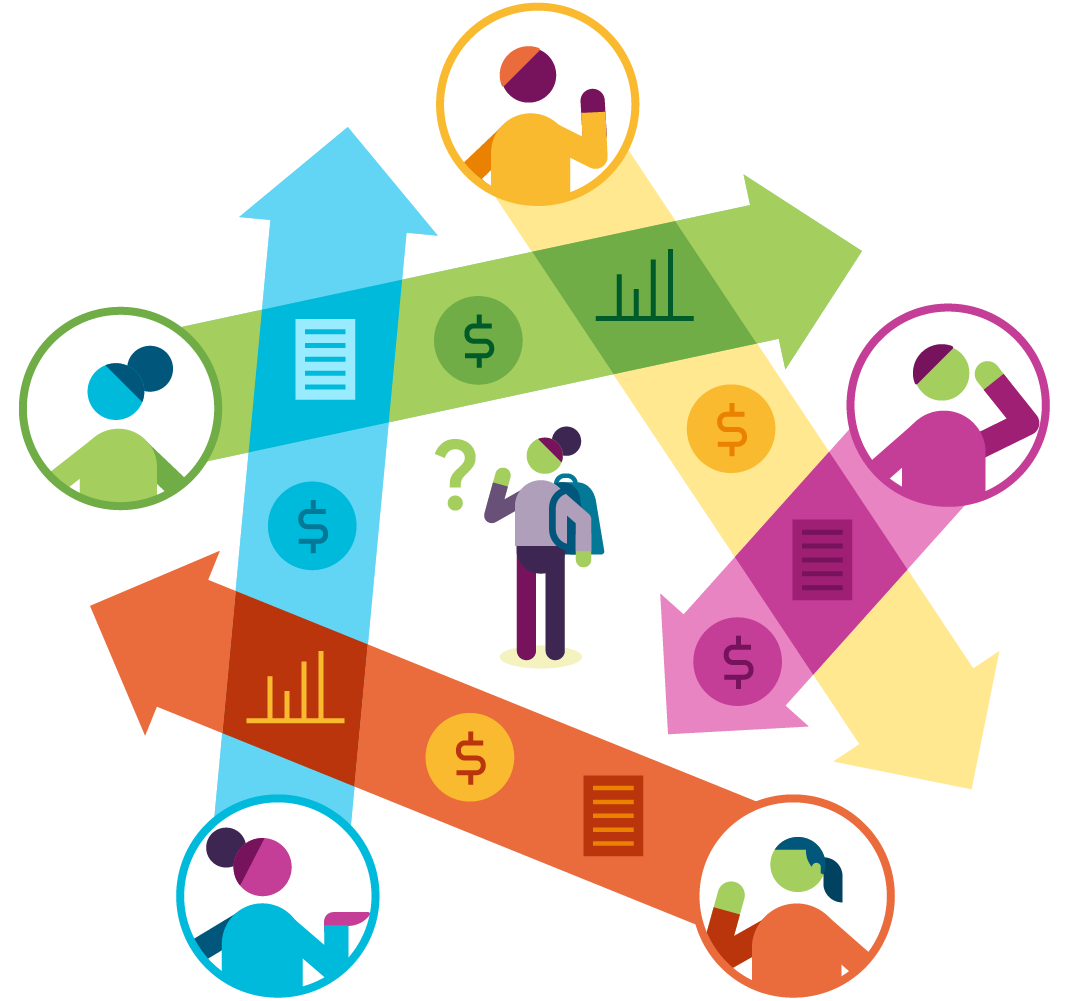
Here’s how to improve governance to help learners succeed.
Strong Governance
In states with strong governance, leaders and agencies are empowered to pursue a common vision and set of priorities for both learner and economic success. Policies, programs and resources are aligned and accountability for outcomes is shared.


-
Intermediaries Intermediaries
-
Workforce Workforce
-
K–12 System K–12 System
-
College College
-
Business/Industry Business/Industry
Essential Pillars
-


Empowered Leadership
Codified leadership structure with cross-sector, cross-system stakeholder representation and decision-making authority
-
Shared Vision & Priorities
Jointly developed multi-year vision and aligned priorities working to strengthen pathways for learners of all ages
-
Aligned Policies, Programs & Funding
Streamlined, aligned and coordinated policies, programs and funding across represented systems and stakeholders
-
Common Metrics
Data collected and outcomes analyzed against the vision and priorities to share publicly and leverage in data-driven decision making


Implementation
Strong governance at the state level sets clear expectations for alignment and quality for local education and workforce program providers. Learners face fewer barriers to accessing and affording education and training.


- K–12
- Higher Education
- Communities
- Workforce
Impact
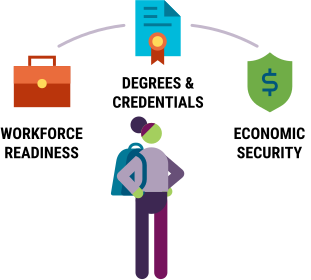
Learners can seamlessly transition from education to workforce, earn credentials of value and succeed in sustainable wage occupations.


Key Structural Examples
These structural models show how states can organize coordination, collaboration, and decision-making authority across empowered stakeholders to support the development and success of high-quality pathways for all learners.
- 1 Cabinet Model
- 2 Quarterback Model
- 3 Tri-Agency Model
Creating a Governor-Led Vision
Cabinet Model
Centers the vision and planning of the cabinet within the state governor’s office and priorities. Cabinet authority can extend to program funding, federal grant administration and even program development (e.g., CTE).
What Sets It Apart
- A dedicated office to convene and coordinate agencies
- Centralized oversight and authority across key stakeholders
- Collective and individual accountability according to data collected and reported

 View State Example
The Four Essential Pillars of Governance are common to any strong, foundational governance model, and all models are strongest when codified in legislation.
Creating an Empowered Agency
Quarterback Model
Through executive order or legislative action, one lead agency is empowered with executing the state’s priorities for education to workforce pathways and broader economic prosperity.
What Sets It Apart
- One agency to set the vision and “call the plays” that other agencies and offices will execute
- Oversees plans for relevant federal grants, which also drive state investments in pathways
- Player agencies retain authority over their own programs and funding, yet with heavy input from the quarterback

 View State Example
The Four Essential Pillars of Governance are common to any strong, foundational governance model, and all models are strongest when codified in legislation.
Creating Shared Governance
Tri-Agency Model
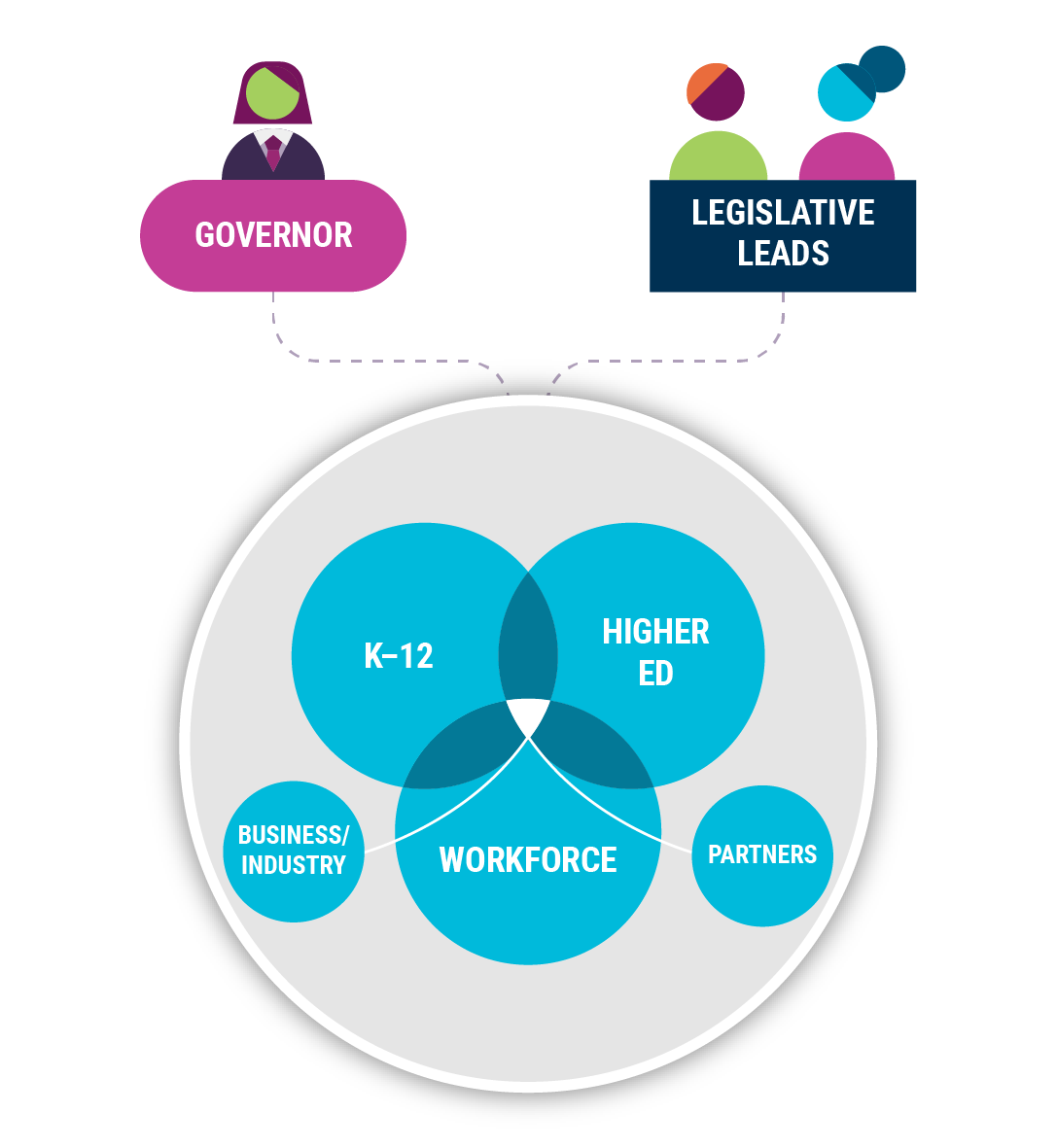
Three major agencies are empowered to meet a unified, common goal for the state. The agencies are required to share data, planning and execution of a strategy for educating and supporting learners of all ages.
What Sets It Apart
- A more decentralized approach that acknowledges the equal role agencies play
- Ensures alignment of agencies even with differences in the learners they serve
- Leaders maintain all funding and program authority, aligned to the common plan and goal for the state
 View State Example
The Four Essential Pillars of Governance are common to any strong, foundational governance model, and all models are strongest when codified in legislation.
Three Key Policies to Start Building Strong Governance
Establish common definitions to drive the work across state agencies
Statewide DefinitionsAnswer key questions about how well pathways are working for learners
ROI AnalysisStrengthen the data infrastructure needed for robust analysis
DATA CONNECTIONS